- Industry News
- 663
- Gearpioneer-Powering Smart Work EveryWhere
- 24/11/2026
Geakita 21V Brushless Impact Wrench Engineering Guide: Sizing, Trade-offs, and RFQ Checklist
Engineering guide to the Geakita 21V brushless impact wrench range: platform architecture, six-step sizing method, brushless trade-offs, battery and certification evidence, and an RFQ checklist.
Geakita 21V Brushless Impact Wrench Engineering Guide: Sizing, Trade-offs, and RFQ Checklist
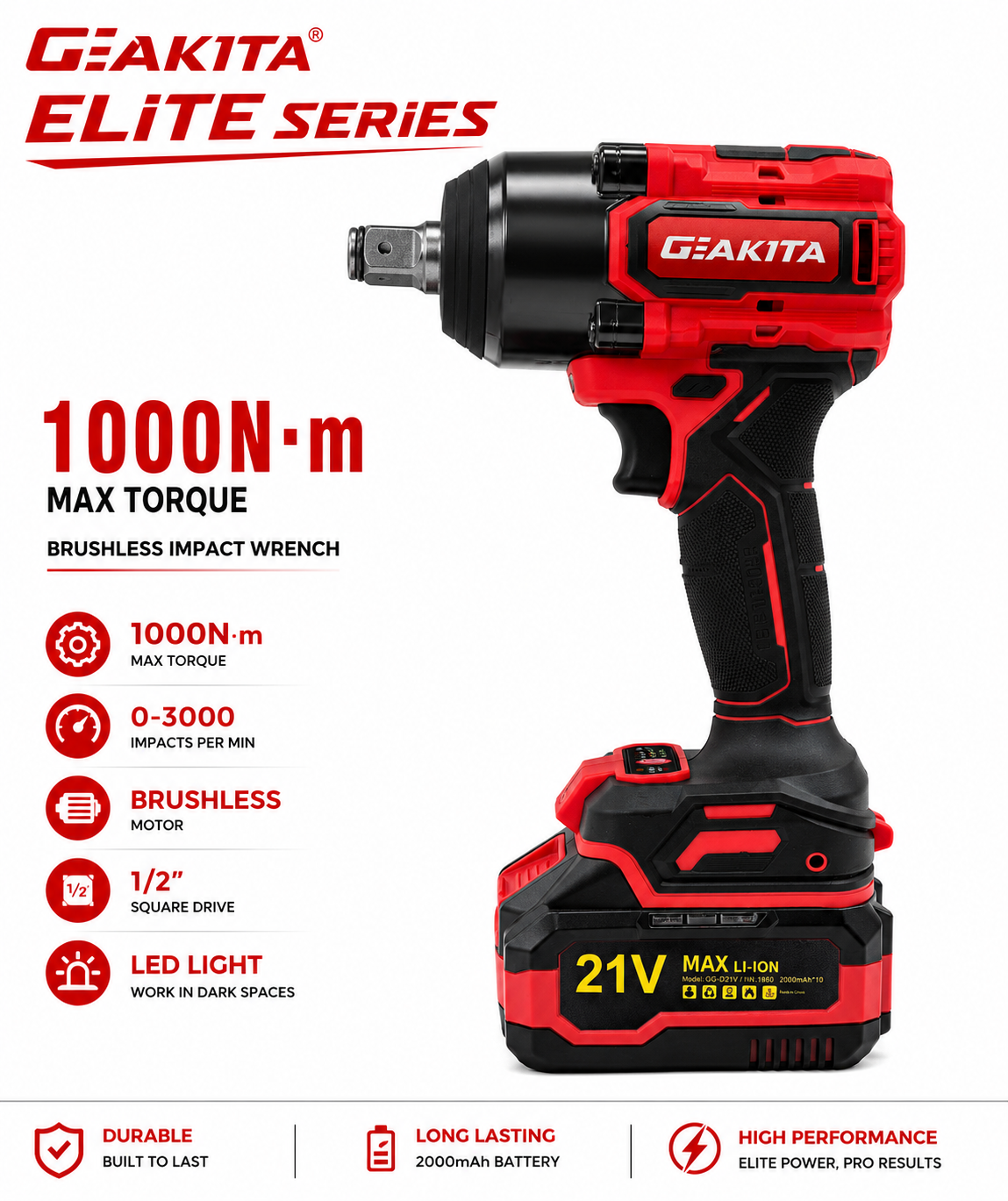
Geakita builds its 21V brushless impact wrench range across several documented model families: the 650 N·m and 1000 N·m wrench families, a 1500 N·m family, the TF350 three-function model, and the GKR05, GKR06 and GKR07 industrial and railway wrenches. All of them sit on the same 21V battery platform that also carries the company's drills, rotary hammers, grinders and impact screwdrivers.
That shared platform is convenient for a distributor. It is not, on its own, a specification. The questions that decide whether this range belongs in a heavy-duty industrial, construction or automotive repair fleet are narrower: which model class matches the fasteners actually being tightened, what the battery configuration really delivers, which documents exist for the specific model number, and what it costs to keep the tool running for three years.
This guide works through those questions in the order a technical buyer meets them — the sizing problem, the platform architecture, a six-step sizing method, application fit, the trade-offs worth pricing in, and a request-for-quotation checklist that can be sent to a supplier as written.
The Sizing Problem: '21V Brushless' Describes a Platform, Not a Wrench
Voltage is a battery class and 'brushless' is a motor topology. Neither term tells a buyer how much torque reaches a fastener, how long the electronics can hold that torque across a shift, whether the socket range covers the site's hardware, or which certificate covers the exact model on the purchase order.
Three failure patterns repeat in fleet purchases of cordless impact wrenches:
- Sizing from a headline number. A peak torque figure quoted without a test method or duration cannot be compared with a competitor's figure, and it does not describe the working torque the tool sustains in repeated cycles.
- Buying the tool before counting the packs. A wrench that arrives on a battery platform nobody else on site uses adds a parallel charger line and a second spares channel, whatever its torque rating.
- Filing certificates at brand level. A folder of conformity documents proves nothing about a specific model unless the certificate's product scope names that model, market and directive.
Good sizing runs the other way: fastener first, duty cycle second, platform third, documents fourth, price last. A wrench that is correctly specified on the first four and mid-priced on the fifth will outperform a cheap wrench that is wrong on all four.
Industry Background: What the Cordless Shift Changes for a Technical Buyer
Grand View Research valued the global cordless power tools market at USD 14.4 billion in 2025 and projects USD 15.7 billion for 2026 (Grand View Research, 'Cordless Power Tools Market Size & Share Report, 2033', page dated 15 September 2026). Category definitions differ between research houses — one alternative estimate in the same evidence set values the category far higher on a broader inclusion of industrial tools and accessories — so treat the figure as evidence of scale rather than as a forecast for impact wrenches specifically.
The procurement consequence matters more than the number. Once cordless is the default rather than the novelty, suppliers compete less on whether a tool has a battery and more on documentation, service life, spares continuity and delivery reliability. Buyers who evaluate on those terms get a better outcome than buyers who compare headline specifications in a catalogue.
Geakita (Xiamen Tiangong Kaiwu Technology Co., Ltd.) is a power tool and intelligent equipment brand founded in 2009, with R&D in Xiamen and manufacturing in Yongkang, Zhejiang. Company-reported figures describe a manufacturing site of approximately 40,000 m² of floor space, more than 300 employees, a 2,000 m² R&D laboratory with a 25-engineer team, 16 invention patents and 25 utility model patents. For 2024 the company reports lithium power tool revenue of RMB 230 million and shipments of roughly 1.5 million units.
For a buyer, the useful signal here is program experience rather than company size: this is a supplier that already runs multi-SKU kit programs across drills, wrenches, grinders and hammers, which is the operating model a distributor assortment or a fleet rollout actually needs.
Inside the Geakita 21V Brushless Architecture
The battery platform
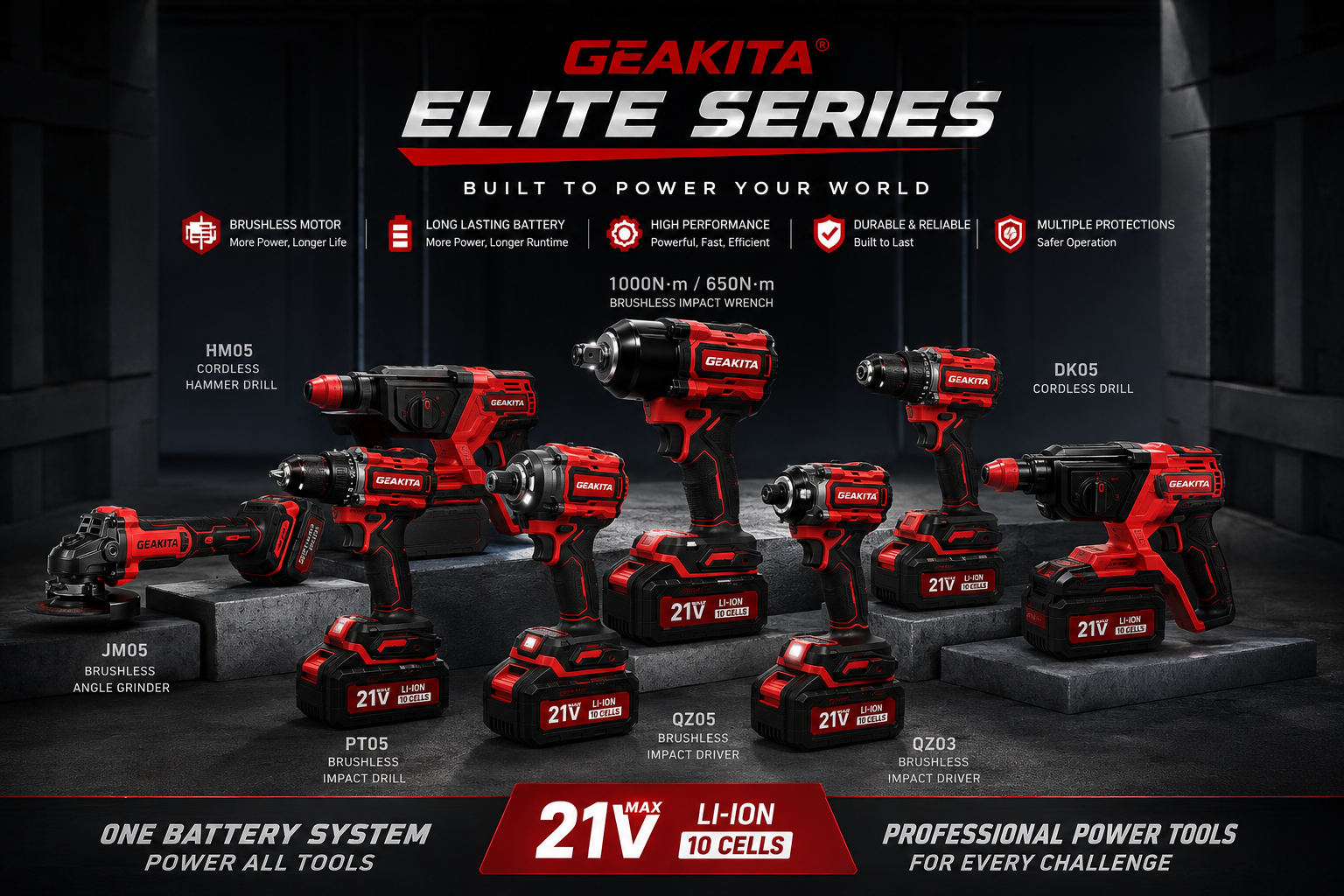
Geakita supplies two voltage families — 16.8V and 21V — together with chargers and matched kit configurations. The 21V tools documented in the current range list 10-cell packs built from 1,300–2,000 mAh cells: for example the PT-05 impact drill and PT-20 drill at 1,300 mAh × 10 cells, and the PT-22 impact drill and HM05 rotary hammer at 1,500–2,000 mAh × 10 cells.
Two further battery products appear in the range and should not be assumed to ship with a wrench kit: a 20V Max 4.0Ah pack with a bidirectional 15 W USB-C port, and the HANDY 21V 20-cell platform with configurable device charging and task lighting. They are separate SKUs. If a program depends on USB-C charging on site or on integrated task lighting, that requirement has to be written into the order rather than assumed from the platform name.
Motor, materials and mechanical protection
Elite-series 21V tools are specified with brushless pure-copper motors, with housings and mechanical parts in ABS, aluminium alloy, steel and copper. The engineering significance of the brushless design is service-related rather than marketing-related: there are no brushes to wear or replace, so the maintenance event that dominates brushed-tool ownership disappears from the plan.
Documented mechanical risk controls for the range include an anti-kickback system, a safety switch and overload protection, backed by full mechanical safety testing and a user manual with detailed safety instructions. Anti-kickback matters most on high-torque wrenches, where the reaction torque — not the fastener — is what injures operators.
Tool heads that share the platform
The 21V platform carries more than wrenches. The documented range includes the PT-05, PT-12, PT-20 and PT-22 impact drills (the main drill collection includes 20 brushless models), the QZ03 and QZ05 impact screwdrivers with the GKR03 industrial model, the JM05 angle grinder, the HM05 rotary hammer, the CS01 cordless lithium circular saw, and the 16.8V DK-05 drill on the smaller platform.
On the wrench side, the documented families are: the TF350 three-function model; the 650 N·m, 1000 N·m and 1500 N·m families; the GKR05 industrial impact wrench; the GKR06 heavy-duty industrial wrench; and the GKR07 upright railway impact wrench. The practical effect for a distributor or fleet manager is a single pack and charger fleet across drilling, fastening, cutting, grinding and tightening tasks, which reduces the number of battery SKUs carried and simplifies replacement stock. The practical caution is that platform compatibility has to be confirmed per kit, not inferred from the family name.
Sizing the Wrench in Six Steps
Step 1 — Start from the fastener and the joint
List the fastener sizes and joint types the tool will actually see: wheel nuts and suspension hardware in automotive repair, structural bolts and formwork clamps on construction sites, machine guards and engine mounts in plant maintenance, track fittings in railway work. The largest and most frequently repeated joint sets the minimum torque class; the second most common joint sets the sensible compromise.
A 1500 N·m class wrench deployed on a site that mostly torques small fittings adds weight and reaction torque without adding usable capability. Conversely, a 650 N·m class tool asked to break corroded heavy fasteners will be worked at its limit all day, which is where electronics and batteries fail first.
Step 2 — Fix the model class, then demand a measured torque figure
Model designations in this range reference torque classes: the 650 N·m family, the 1000 N·m family, the 1500 N·m family. A designation is a naming convention, not a test result. Ask for the measured torque value, the test method used to obtain it, and whether the published figure is working torque or peak torque. Without those three items, two wrenches both labelled '1000' cannot honestly be compared — and the buyer, not the supplier, carries the risk of that gap.
Step 3 — Count packs and chargers before the tool
Battery economics usually decide fleet cost more often than tool price does. For continuous industrial operation — 8–12 hours a day is the documented use case for industrial production lines — plan pack rotation rather than pack count: at least two packs per tool in service, plus charger capacity sized to the shift pattern and to the actual charge time.
Confirm the pack's rated capacity in Ah, the charge time, and whether kits ship with one or two packs. A cheaper tool body supplied with a single small pack often costs more per operating hour than a higher-specification body with two larger packs, because the second configuration spends less of the shift waiting.
Step 4 — Set the duty cycle and the maintenance expectation
Geakita's comparison material positions brushless tools against brushed and low-cost generic tools at 50% less maintenance required and no brush replacement. Take the second half of that as a design fact — a brushless motor has no brushes, so there is no brush service event — and treat the percentage as a supplier statement to be validated against your own service history over the first contract year.
The same comparison material cites a 10–15% lower total cost of ownership over three years, 20% lower maintenance cost, 30% higher working efficiency, 50% longer service life, 20% longer battery runtime, 25% higher energy efficiency, and a 0.5% versus 3–5% defect rate against brushed and generic alternatives. All of these are Geakita-reported comparative figures, not independent laboratory results, and they assume comparable utilisation. A buyer's own TCO model should start from them and then substitute local labour rates, downtime cost and freight.
Step 5 — Verify documents at model level, not brand level
The compliance file for this range includes CE certificates issued under Electromagnetic Compatibility Directive 2014/30/EU by KTI (Guangdong Kaixu Testing Technology Co., Ltd.), dated 4 August 2025 and valid to 4 August 2030, tested against EN IEC 55014-1:2021, EN IEC 55014-2:2021, EN IEC 61000-3-2:2019+A2:2024 and EN 61000-3-3:2013+A1:2019+A2:2021. Certificate numbers KTi250704E245C and KTi250704E247C list the 650 N·m and 1000 N·m impact wrench models and the Elite series within their product scope.
Read that list precisely. The CE certificates cover electromagnetic compatibility, which is not the same as full product safety conformity. A UKCA certificate B-S2412C5162 issued by Beide Compliance Laboratory and a CMA test report WTS2026-S0339 issued by Zhejiang Zhongxie Lide Quality Testing Technology Co., Ltd. to GB 3883.1-2014 also appear, with GKR05 listed among the covered products — but certificate scope statements are specific, and a document whose stated scope reads 'multi functional electric hand drill' does not automatically extend to an impact wrench. The correct instruction to any supplier is: send the certificate or test report whose scope names the exact model, market and directive, together with the declaration of conformity that references it.
Step 6 — Write acceptance criteria into the order
Acceptance is where specifications become enforceable. The documented acceptance route is 100% pre-shipment inspection by the supplier's QC team, third-party inspection by SGS or TÜV on request, and on-site acceptance at the factory. Whichever route a buyer chooses, the criteria — torque verification method, functional test, cosmetic standard, packaging and labelling, sample retention — should be attached to the purchase order rather than agreed verbally in a meeting.
Application Fit: Where the Range Sits in Real Work
Documented application scope for the range covers manufacturing and industrial production, construction and infrastructure projects, automotive repair workshops, railway maintenance, hardware distribution and e-commerce retail. Working conditions are classed as professional-grade and industrial heavy-duty, with operating modes ranging from continuous 8–12 hour industrial shifts to intermittent on-demand use.
Industrial maintenance and assembly. Continuous operation, repeated fastening cycles and multi-shift use. Brushless motor service life and pack rotation planning dominate the decision; the GKR05 and GKR06 industrial wrenches, and the 1000 N·m and 1500 N·m families, are the documented heavy-duty options.
Construction and infrastructure. Structural bolting, formwork and equipment assembly, with dust, vibration and temperature swings. The documented evidence for this environment includes the mechanical safety controls (anti-kickback, overload protection) and the 45 °C+ ambient performance reported in the case material below.
Automotive repair. Tyre changes, suspension and engine disassembly, where the 650 N·m family and the TF350 three-function model are the documented lower-torque options and socket range matters as much as peak torque.
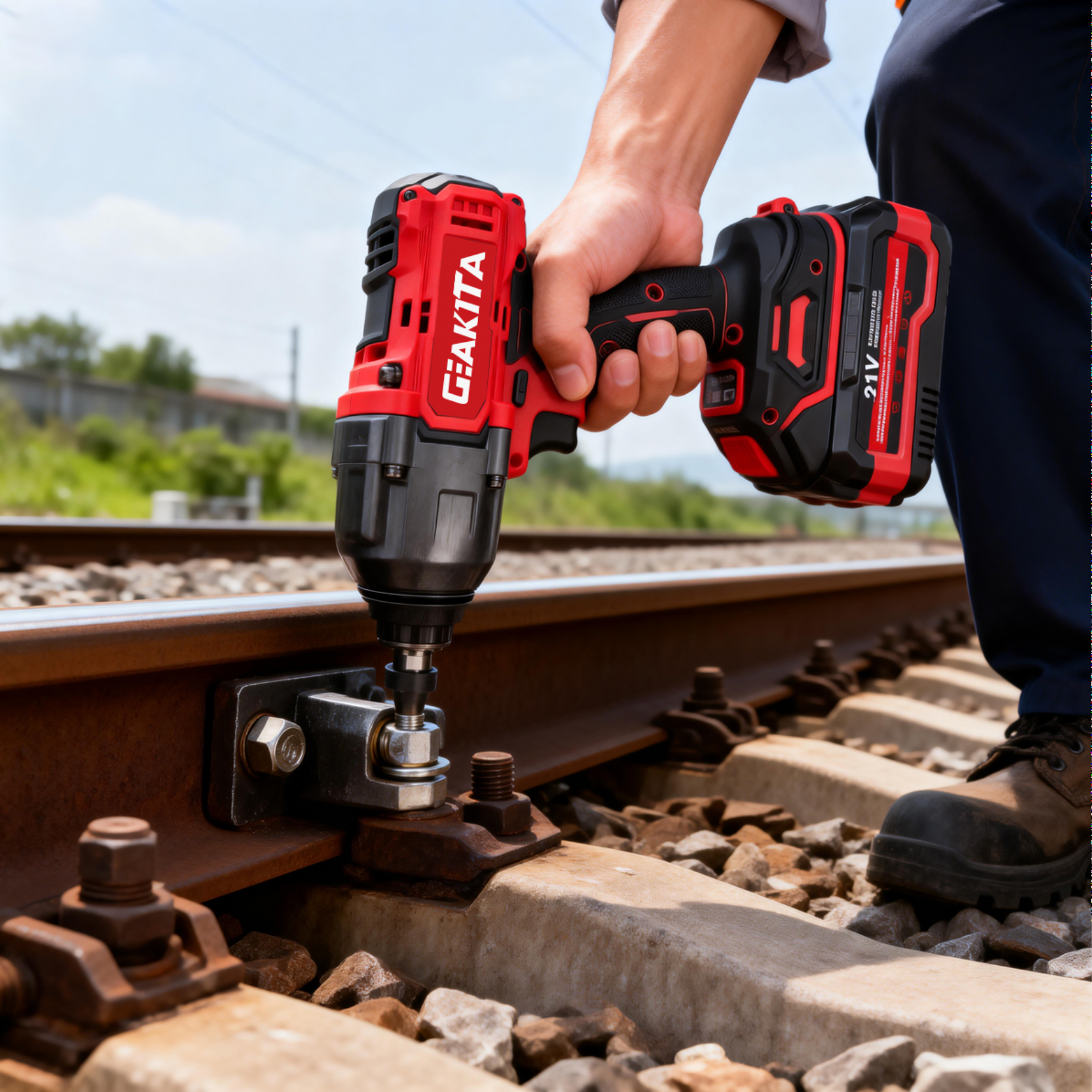
Railway maintenance. The GKR07 upright railway impact wrench is a dedicated design for track fitting work; the upright format is a positioning decision as much as a torque decision, and should be trialled on the actual sleeper and clip pattern before specification.
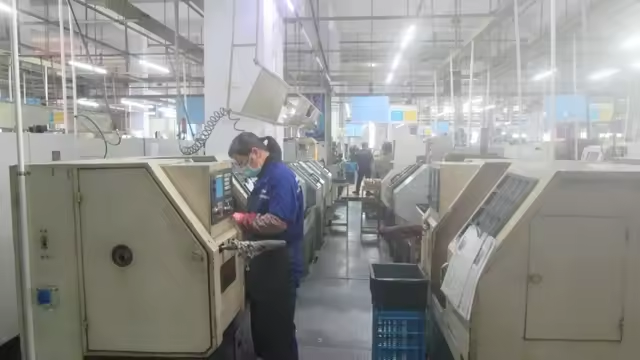
What the field record says — and does not say. Geakita case material documents a program of 5,000+ units over two or more years across construction, automotive repair and woodworking customers, with reported 99.8% on-time delivery, a 0.3% defect rate and stable performance in ambient conditions above 45 °C. The same material describes Tier-A approval for key materials (cells, magnets, bearings, cutting tools), 100% incoming quality sampling, inline torque and electrical monitoring, automatic end-of-line testing and outbound sampling. These are supplier-reported program figures. They are useful as benchmarks to hold a supplier to in a contract; they are not an independent audit result, and a buyer with a critical application should still verify with their own incoming inspection.
Trade-offs: What the Brushless Premium Buys and What It Does Not
The comparison below reproduces the documented brushless-versus-brushed and generic comparison. It is a supplier comparison, so it should be read as a hypothesis to test against your own maintenance records rather than as a guaranteed outcome.
| Dimension | Brushless (documented) | Brushed / low-cost generic (documented) | What it means for the buyer |
|---|---|---|---|
| Working efficiency | 30% higher (company comparison) | Baseline | Shorter task time per fastener, or the same work with a smaller pack |
| Service life | 50% longer (company comparison) | Baseline | Fewer replacement cycles inside a three-year plan |
| Battery runtime | 20% longer per charge | Baseline | Fewer packs in rotation for the same shift pattern |
| Energy efficiency | 25% higher, lower power consumption | Baseline | Lower charging energy and heat load in continuous use |
| Reported defect rate | 0.5% | 3–5% | Incoming inspection and warranty handling costs fall with the defect rate |
| Maintenance | 50% less required; no brush replacement | Brush replacement and associated service events | Predictable service plan with one recurring cost removed |
| Three-year TCO | 10–15% lower (company comparison) | Baseline | Payback depends on utilisation; low-hour users see less benefit |
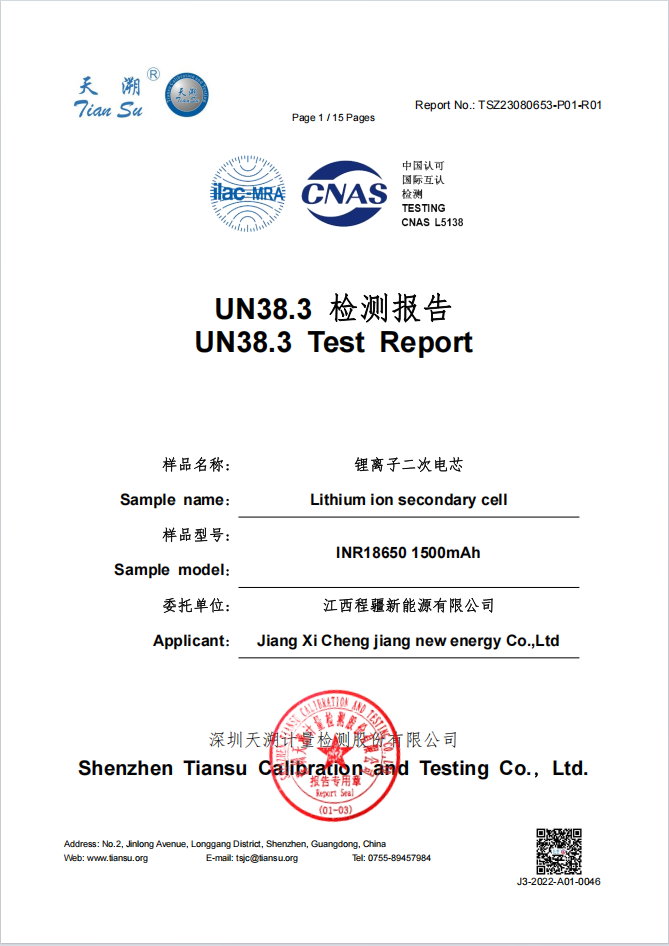
Limits worth stating plainly. First, a lower three-year TCO does not mean a lower purchase price — it means the acquisition premium is recovered through service savings, and that only happens if the tool accumulates enough hours to consume the brush-service saving. Second, the comparative percentages are Geakita-reported and not independently tested; they should be validated against your own failure log. Third, high-torque cordless wrenches generate reaction torque that the operator absorbs, which is exactly why anti-kickback control and operator training belong in the same purchase decision as the tool. Fourth, lithium packs bring transport obligations: UN38.3 documentation and dangerous-goods paperwork are part of the shipment, not an optional extra, and they need to be requested per battery model.
Battery and Mechanical Safety: What the Evidence Actually Covers
Battery risk in cordless tools concentrates in three failure modes: overcharging, short circuit and thermal events in extreme environments. The documented controls for this range are an intelligent battery management system with overcharge, over-discharge and short-circuit protection, A-grade lithium-ion cells, 100% battery safety testing before shipment, and UN38.3 compliance for transport.
Mechanical risk concentrates in kickback and blade or socket breakage. The documented controls are the anti-kickback system, safety switch and overload protection, full mechanical safety testing, and a manual with detailed safety instructions. Neither set of controls replaces operator training, but together they define what a buyer should be able to audit: a BMS specification, cell grade declaration and incoming inspection record, a UN38.3 test summary per battery model, and mechanical safety test evidence per tool family.
RFQ and Qualification Checklist
The checklist below converts the preceding sections into items a purchasing team can send to a supplier. Every line should be answerable in writing, and any line left unanswered should be treated as a commercial risk rather than an oversight.
Technical
- Model number and family designation, with measured torque value, test method and whether the figure is working or peak torque.
- Battery pack rated voltage, rated capacity in Ah, cell capacity and cell count, series/parallel arrangement and charge time.
- Packs and chargers included per kit, and whether additional packs can be added to the same SKU.
- Socket and accessory range supplied, plus spares availability and recommended stocking quantities.
- Duty rating and recommended continuous operating pattern for the intended shift.
Compliance and safety
- CE certificate number and declaration of conformity for the exact model, under the correct directive (the documented EMC certificates are KTi250704E245C and KTi250704E247C, valid to 4 August 2030).
- UKCA certificate B-S2412C5162 and its stated product scope, confirmed against the ordered model.
- CMA test report WTS2026-S0339 to GB 3883.1-2014, with the covered model list.
- UN38.3 test summary per battery model, plus the dangerous-goods documentation used for the shipment.
- BMS protection specification and the cell grade declaration with incoming inspection records.
- Mechanical safety test evidence for the tool family, and a current user manual in the destination language.
Commercial and service
- MOQ, price breaks, tooling or artwork charges for labels, packaging and colours.
- Lead time for mass production and for repeat orders, quoted separately from shipping.
- Delivery terms and ports, payment terms, and inspection route (in-house PSI, third-party SGS/TÜV, or on-site acceptance).
- Warranty terms, defective-unit replacement process, spare-parts supply commitment and technical support channel.
Documented commercial terms for the range are: standard models at 100 units per SKU, OEM/ODM customized models at 500 units per SKU, small-batch trial orders of 40 units, and for mixed-assortment orders a minimum of five power tool categories at eight items each. Mass production runs at 30–45 days, repeat orders at 20–28 days, with shipping calculated separately by method and destination port. Reported monthly production capacity is above 180,000 units across the range, and third-party inspection by SGS or TÜV plus on-site factory acceptance can be arranged on request.
FAQ
Which compliance documents should accompany a 21V brushless impact wrench order?
Request the certificate or test report whose product scope names the exact model, market and directive, plus the declaration of conformity that references it. For the Geakita range the documented file includes CE certificates under EMC Directive 2014/30/EU (KTi250704E245C and KTi250704E247C, issued 4 August 2025, valid to 4 August 2030, tested to the EN IEC 55014 series), UKCA certificate B-S2412C5162, and CMA test report WTS2026-S0339 to GB 3883.1-2014. The CE certificates cover electromagnetic compatibility, not full product safety, so confirm that the scope statement matches the ordered model rather than the brand.
What evidence supports battery safety on the 21V packs?
The documented battery controls are A-grade lithium-ion cells, an intelligent battery management system with overcharge, over-discharge and short-circuit protection, and 100% battery safety testing before shipment, with UN38.3 compliance for transport. For an audit trail, ask for the UN38.3 test summary per battery model, the dangerous-goods documentation used for the shipment, and the incoming cell inspection record. Note that UN38.3 addresses transport safety and does not by itself establish the electrical safety of the finished tool, which is covered by the tool-level test evidence.
Which 21V model fits heavy-duty industrial work rather than light repair?
The documented heavy-duty options are the GKR05 industrial impact wrench, the GKR06 heavy-duty industrial wrench, and the 1000 N·m and 1500 N·m families, with the GKR07 upright railway impact wrench as a dedicated design for track work. For automotive repair and general maintenance, the 650 N·m family and the TF350 three-function model are the documented lower-torque options. Because model designations reference torque classes rather than test results, confirm the measured torque and duty rating for the specific model before it enters a specification.
How should a buyer evaluate the three-year cost of ownership?
Start from the supplier's comparative figures and then substitute your own operating data. Geakita's comparison material states 10–15% lower total cost of ownership over three years, 20% lower maintenance cost, 50% less maintenance, no brush replacement, 25% higher energy efficiency, and a 0.5% versus 3–5% defect rate against brushed and low-cost generic tools. Build the model from acquisition cost, packs and chargers, avoided brush-service events, expected downtime cost, spares and freight. These percentages are supplier-reported and only hold where utilisation is high enough to consume the brush-service saving.
Can we test before committing to volume?
Yes, within the documented terms. Small-batch trial orders of 40 units are listed, alongside standard-model MOQ of 100 units per SKU and OEM/ODM MOQ of 500 units per SKU; mixed-assortment orders carry a minimum of five power tool categories at eight items each. Third-party inspection by SGS or TÜV can be arranged on request, on-site acceptance at the factory is offered, and acceptance normally runs through 100% pre-shipment inspection. Confirm which terms apply to your specific model, pack configuration and destination market before the trial order is placed.
What lead time should we plan for, and how do we open the RFQ?
Mass production is quoted at 30–45 days and repeat orders at 20–28 days, with shipping calculated separately by method and destination port. Delivery terms are FOB Shenzhen or Ningbo, EXW factory, or DDP door-to-door; payment is 100% T/T, with 50% down and 50% against B/L acceptable on larger orders. To open an RFQ, send the model and family, pack configuration, socket and accessory list, destination market and required certification set in writing. The 2026 Geakita corporate profile and product catalog can be downloaded from the link at the end of this guide, and product information is published at www.geakita.com.
Conclusion
The Geakita 21V brushless impact wrench range is a coherent platform decision: one battery family across drills, screwdrivers, grinders, rotary hammers, circular saws and wrenches, from a 650 N·m family up to a 1500 N·m family, with dedicated GKR05, GKR06 and GKR07 industrial and railway designs. For a distributor, that reduces pack and charger SKUs. For an industrial or construction fleet, it simplifies spares and training.
The platform does not answer the sizing question for you. What answers it is a measured torque figure with a stated method, a pack specification in Ah rather than cell count, a documented duty rating, and a certificate whose scope names the model on the order. Buyers who demand those four items before comparing price will get a wrench that fits the work; buyers who compare catalogue numbers first will eventually pay the difference in service events and downtime.
Next step: request the specification pack
Build the RFQ from the checklist above — model and family, pack configuration, socket range, destination market and certification set. The 2026 Geakita corporate profile and product catalog contains the full power tool range, platform details and company information: download the GEAKITA Corporate Profile & Product Catalog 2026 (PDF).