
- Industry News
- 540
- Gearpioneer-Powering Smart Work EveryWhere
- 18/11/2026
Cordless Power Tools Explained: Battery, Motor and Tool Head
Cordless power tools explained from the inside out: battery platform, motor, control electronics and tool head, with Geakita specs and why voltage is not torque.
Cordless Power Tools Explained: Battery, Motor and Tool Head
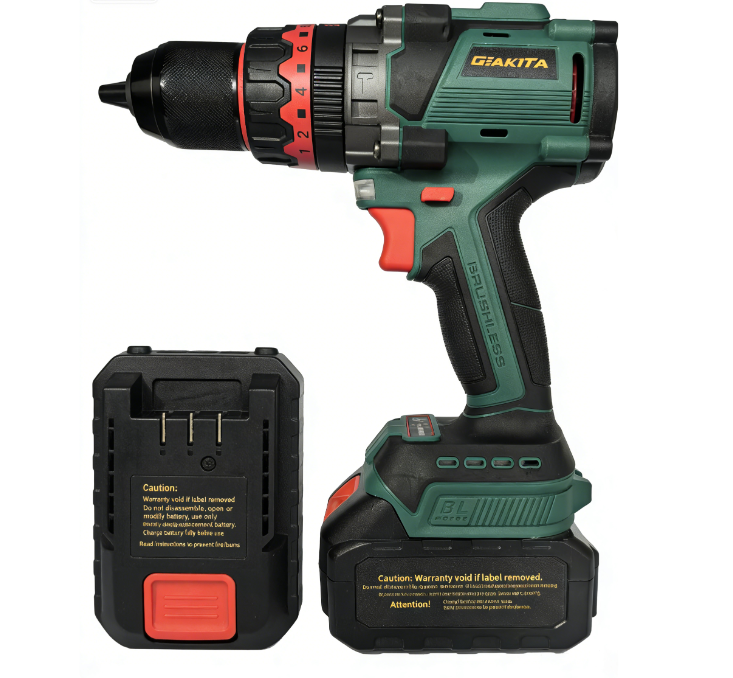
The short answer: a cordless power tool is a portable machine that draws its working energy from a battery pack instead of a mains cable and converts it, through a motor and a task-specific mechanism, into drilling, fastening, cutting, grinding, chiseling or screwdriving. Cordless describes the power source, not the job. The same battery platform can feed a 16.8V brushless impact drill, a 21V rotary hammer, a 650 N·m impact wrench or a 21V angle grinder, which is why the category is easier to learn as a four-part system than as a list of product names.
Geakita (Xiamen Tiangong Kaiwu Technology Co., Ltd.) has manufactured since 2009 and lists cordless power tools across 16.8V and 21V battery families, alongside two adjacent lines, robotic pool cleaners and commercial cleaning robots. Its published model data makes a practical teaching set: it shows what the parts of a cordless tool look like in real numbers, and where those numbers stop being comparable.
What the word cordless really describes
A cordless power tool is defined by where its energy comes from. Almost anything that was once tethered — drill, impact driver, rotary hammer, angle grinder, circular saw — can be rebuilt around a removable battery pack, and once that happens the tool inherits a new set of constraints: cell configuration, charge state, heat, and the weight of the pack itself. Nothing in the word tells you which tool performs which task.
The numbers are not transferable. Voltage describes the battery platform, torque describes rotational force at the output, and drilling capacity describes what a bit can bore through a named material. A larger voltage figure does not automatically produce more torque, and Geakita's own published parameters demonstrate that directly in a later section.
The labels are not standardised. A lithium-ion pack can be sold as 16.8V, 18V or 20V Max depending on whether the figure refers to full charge, nominal voltage or a marketing convention. Geakita's catalogue shows the overlap inside one range: the DK00 drill is listed as 16.8V–18V, and the battery line includes a 20V Max 4.0Ah pack beside 16.8V and 21V families.
The boundary is porous. Battery-powered pool cleaners and commercial cleaning robots are cordless machines, but they are not power tools: they carry their own specifications and belong to a separate equipment category. Geakita's portfolio spans both, which makes the dividing line easy to blur for a first-time buyer.
Where the category sits in 2026
Published market sizing places cordless power tools in the tens of billions of dollars. Grand View Research valued the global market at USD 14.4 billion in 2025 and projects USD 15.7 billion for 2026, with a forecast horizon to 2033 (Grand View Research, Cordless Power Tools Market Size & Share Report, 2033, published September 2026).
Read that headline as a scope statement as much as a size. Research houses differ over what belongs inside the definition — whether robotic lawn mowers, pool cleaners and cleaning robots are counted, and whether accessories are included — so figures from different publishers are not directly comparable. A category explainer should keep the definition attached to the number rather than quoting the number alone.
At manufacturer scale, Geakita reported RMB 230 million in lithium power tool revenue for 2024, with approximately 1.5 million units shipped. The company reports exports at around 20% of its business, with main markets in Europe, Southeast Asia and the Middle East, and states that it is a member of the Power Tool Sub-Association of the China Electrical Equipment Industry Association. Its manufacturing site in Yongkang, Zhejiang, is supported by R&D in Xiamen; the company reports a 2,000 m² R&D laboratory, 16 invention patents and 25 utility model patents.
The four parts every cordless tool shares
Every product in the category is the same chain: battery platform, motor, control and transmission, tool head. Learn the chain and a specification sheet stops being a wall of numbers.
Part 1 — the battery platform
Geakita supplies 16.8V and 21V battery families with matching chargers and kit configurations. Capacity is published in a cell-count form: 1300mAh*4cells on the 16.8V DK-05, 1300mAh*5cells on the PT01, 1500mAh*10cells on the PT-21, 2000mAh*15cells on the PT24 and 2000mAh*10cells on the RH01.
The voltage label follows a simple calculation, made here rather than quoted from the source: a four-cell series string reaches 4 × 4.2V = 16.8V at full charge, and a five-cell string reaches 5 × 4.2V = 21V. Cells beyond the series count add energy capacity rather than voltage — ten cells can be two parallel five-cell strings. That is why a platform decision outranks a badge decision: packs, chargers and tool bodies have to match, and mixing platforms multiplies the equipment a site or a shop has to stock.
Part 2 — the motor
Most named Geakita cordless models list a brushless pure copper motor: the 16.8V DK-05, and the 21V PT24, PT-21, HM05, GKR05 and QZ05. Brushed models remain in the range as well, including the 12V 9868 brushed drill and the 21V 9996 brushed impact drill, so brushless is a model attribute rather than a rule for the whole category.
The mechanism is straightforward. A brushed motor feeds current through carbon brushes bearing on a rotating commutator; a brushless design switches current electronically, so the brushes and their wear surface are removed from the design. What that means for a specific tool depends on the motor, the control electronics and the pack working together, and the published sheets do not quantify a runtime or service-life difference. A buyer comparing two models should compare them on the task, not on the motor label alone.
Part 3 — control and transmission
This is the part first-time buyers overlook. Between motor and output sit the gearbox and the electronics, and they decide how usable a tool feels in the hand.
Concrete examples from the range: the PT24 lists 24+3 torque settings against 150 N·m; the PT01 lists 20+1 settings against 60 N·m; the PT02-1 lists 23+1 settings against 55 N·m. No-load speed is published as 450–2000 r/min across the PT series. The RH01 rotary hammer lists 0–2000 r/min with a 0–4500 min frequency, and the GKR05 impact wrench lists 0–4000 r/min. The DK01 drill lists a 7000 BPM impact frequency and 1.15 kg; the DK00 lists 7000/24000 BPM, stepless speed regulation, an LED light, forward and reverse, and 1.6 kg.
Part 4 — tool head and consumable
The final link is what actually touches the material: chuck, bit, socket or disc. Geakita's drill models use a three-jaw metal ratchet chuck — 13 mm on the PT24, PT-21, PT20 and DK01, and 10 mm on the PT01 and PT02-1. Drilling capacity is published per material: the RH01 lists Φ26 mm in concrete, Φ13 mm in steel and Φ26 mm in wood; the DK00 lists 13 mm in steel and 60 mm in wood; the DK01 lists 13 mm in steel and 50 mm in wood.
Consumables are part of the system, not an afterthought. Geakita lists battery packs, chargers, drill bits, screwdriver bits, grinding wheels, cutting discs, sockets, router bits and carrying cases as matched equipment for these tools.
The six tool families a first-time buyer meets
Six families cover most of what a new buyer encounters, and the governing specification changes from one row to the next. That is the single most useful thing to internalise about the category.
| Family | What it does | Geakita examples | The specification that governs it |
|---|---|---|---|
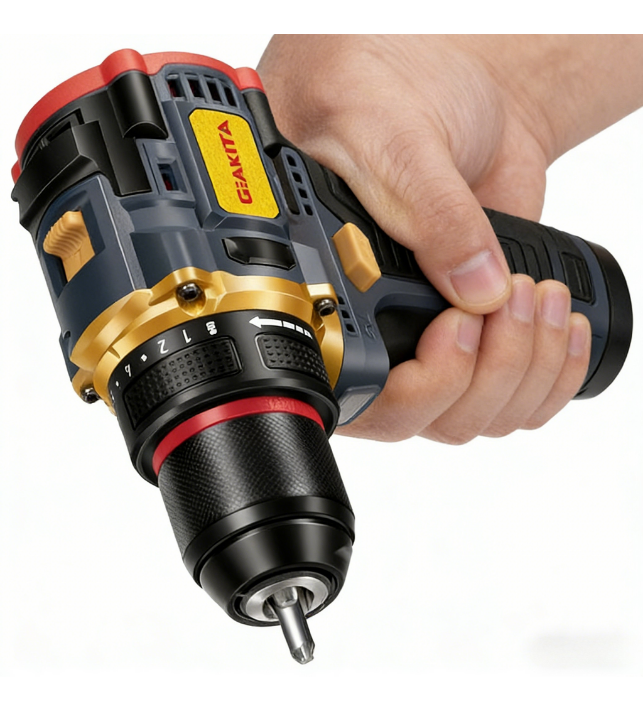
| Drill and impact drill | Drilling and screwdriving in wood, metal and light masonry | DK-05 (16.8V brushless impact drill), PT24 (21V brushless impact drill) | Torque and chuck size — PT24 lists 150 N·m and a 13 mm three-jaw metal ratchet chuck |
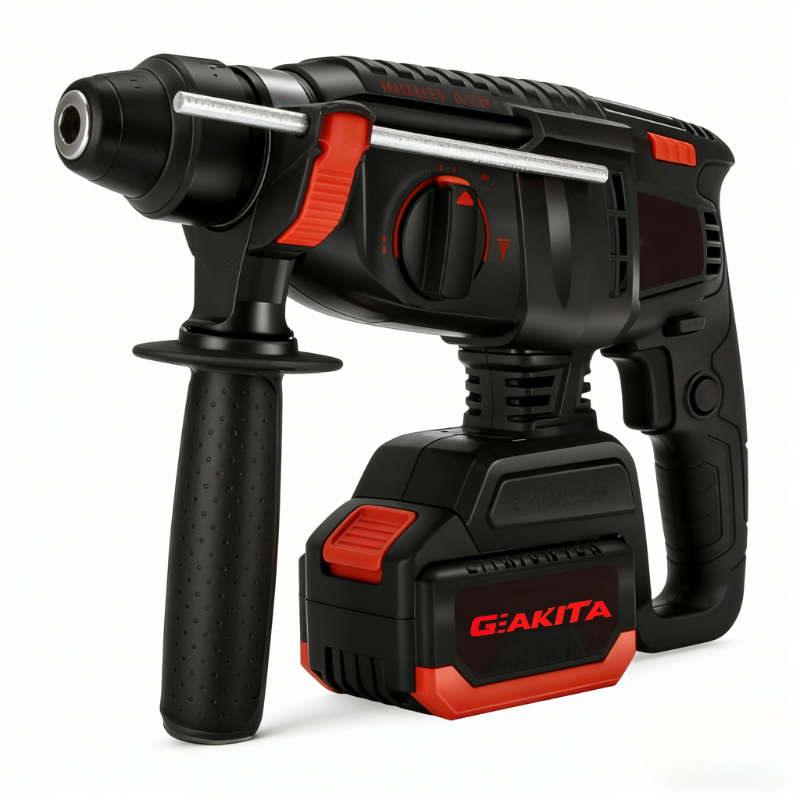
| Rotary hammer | Drilling and chiseling in concrete and masonry | RH01, HM05 (21V cordless rotary hammer) | Drilling capacity — RH01 lists Φ26 mm in concrete, Φ13 mm in steel, Φ26 mm in wood |
| Impact wrench | Impact tightening and loosening of threaded fasteners | GKR05; 650 N·m and 1000 N·m families; TF350 3-in-1 multifunction impact wrench kit | Torque — GKR05 lists 650 N·m at a 21V platform |
| Impact screwdriver | Fastening and assembly work | QZ05, QZ03, GKR03 | Format and voltage — QZ05 is a handheld 21V fastening tool with a brushless pure copper motor |
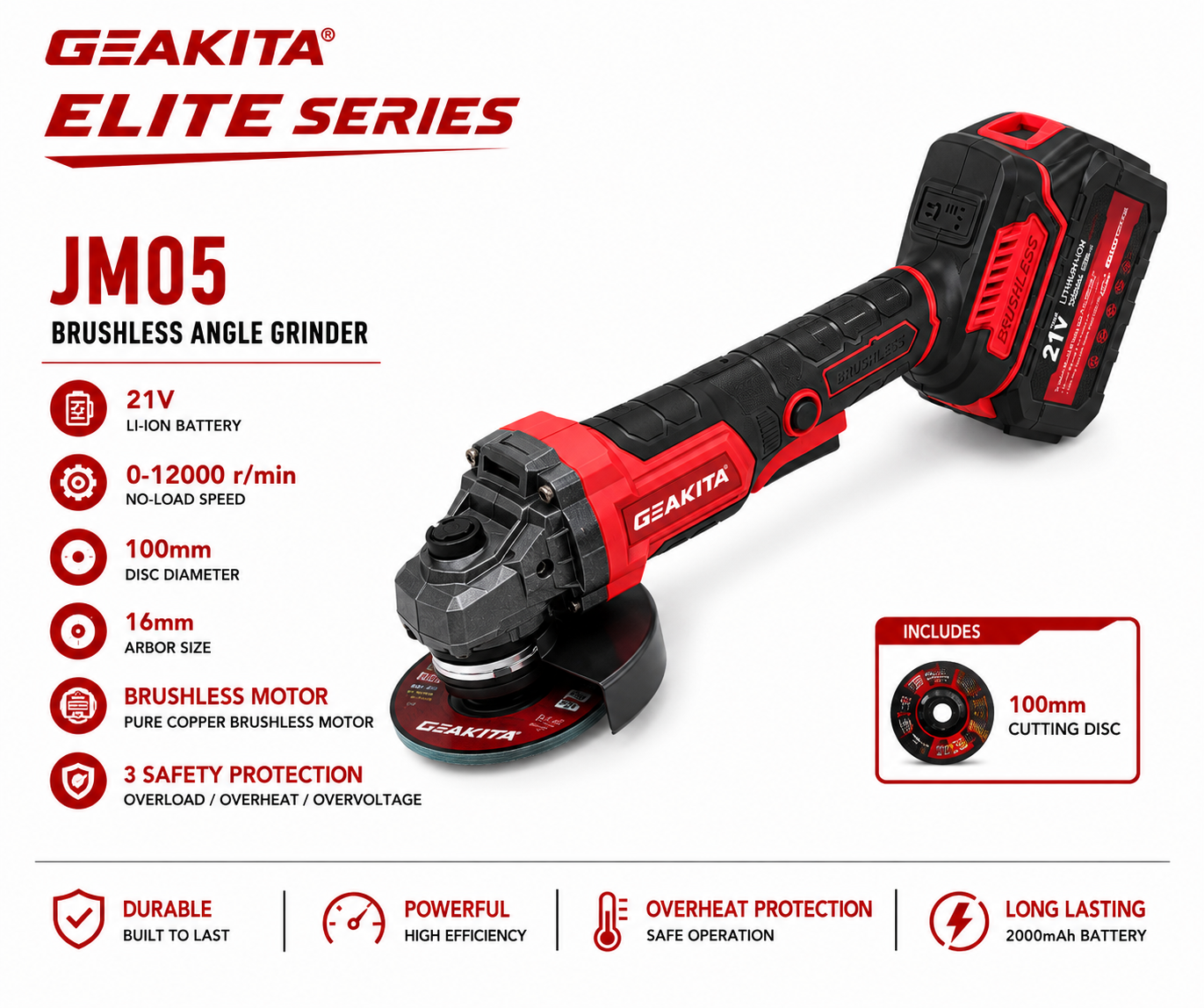
| Angle grinder | Cutting and grinding | JM05 (21V cordless angle grinder) | Task fit — JM05 is listed for cutting and grinding |
| Circular saw | Woodworking trimming and cross-cutting | CS01 cordless lithium circular saw | Not parameterised in the supplied source — request the datasheet |
One row is deliberately incomplete. Geakita's range includes a cordless lithium circular saw, model CS01, but the supplied material does not publish its cutting depth, blade size or speed. A first-time buyer should request the datasheet rather than borrow a figure from a neighbouring model; that habit is worth more than any single number in this article.
How to read a cordless tool listing in five steps
- Name the motion, not the tool. Boring a 26 mm hole in concrete, loosening a 650 N·m fastener and trimming a board are three different motions. The motion picks the family; the family picks the specification that matters.
- Fix the platform first. If a shop or a site already runs 21V packs, adding a 16.8V model creates a second charging ecosystem. Platform continuity is a purchasing decision, not a footnote.
- Find the governing number. Torque for impact wrenches and drills, drilling capacity for rotary hammers, and the datasheet for any family where the published data is thin.
- Check the control granularity. Torque settings, speed range, impact frequency and forward and reverse decide whether a tool suits finish work or only rough work. The PT24's 24+3 settings and the DK00's stepless regulation sit at different points on that spectrum.
- List everything the tool needs to run. Battery, charger, bit, disc, socket, case. Then confirm whether the quoted SKU is a bare tool or a kit, because Geakita supplies battery families, chargers and matched kit configurations as distinct items.
Voltage, torque and the number people misread
The most common first-reader error is treating voltage as a ranking of power. Within Geakita's published parameters, it is not.
| Model | Listed voltage | Listed actual torque | Chuck diameter |
|---|---|---|---|
| DK01 | 16.8V | 120 N·m maximum | 13 mm |
| PT20 | 21V | 80 N·m | 13 mm |
| PT-21 | 21V | 80 N·m | 13 mm |
| PT24 | 21V | 150 N·m | 13 mm |
The 16.8V DK01 lists a higher maximum torque (120 N·m) than the 21V PT20 and PT-21 (80 N·m each), while the 21V PT24 lists 150 N·m. Voltage sets the platform; the motor, gearbox and current delivery set the output. Two consequences follow for a newcomer: compare torque only between tools doing the same job, and read a voltage figure as a compatibility statement rather than a performance ranking.
Chuck size tells a similar story. A 13 mm chuck accepts a wider range of bit shanks than the 10 mm chuck listed on the PT01 and PT02-1, which is a statement about what the tool can hold — not about how much force it delivers.
Where cordless tools are used, and under what conditions
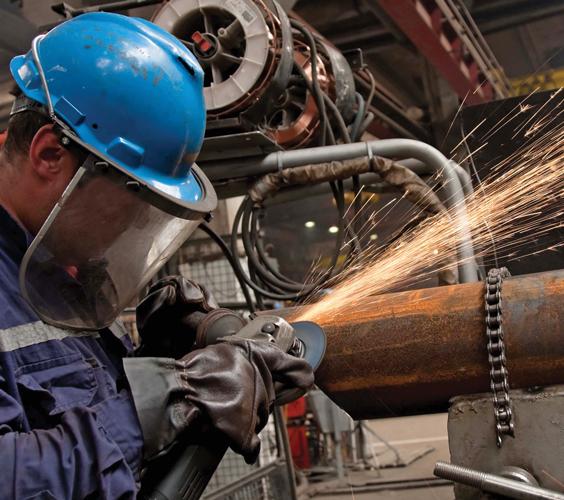
Geakita describes its cordless tools as operating under professional-grade and industrial heavy-duty conditions. The application material lists construction and infrastructure projects as core uses, with renovation projects, auto repair workshops, manufacturing assembly lines, e-commerce retail, hardware store distribution and DIY home improvement alongside them. Functions named across the range are drilling, fastening, cutting, grinding, chiseling, screwdriving and impact tightening or loosening.
Duty cycle separates tools more sharply than product name does. The same application data distinguishes continuous operation of 8–12 hours a day from intermittent DIY or household use, and pairs that with ergonomic design for long holding plus low vibration and noise for workshop safety. A tool selected for a maintenance bay on a continuous shift is a different requirement from one selected for occasional home use, even when both are cordless drills.
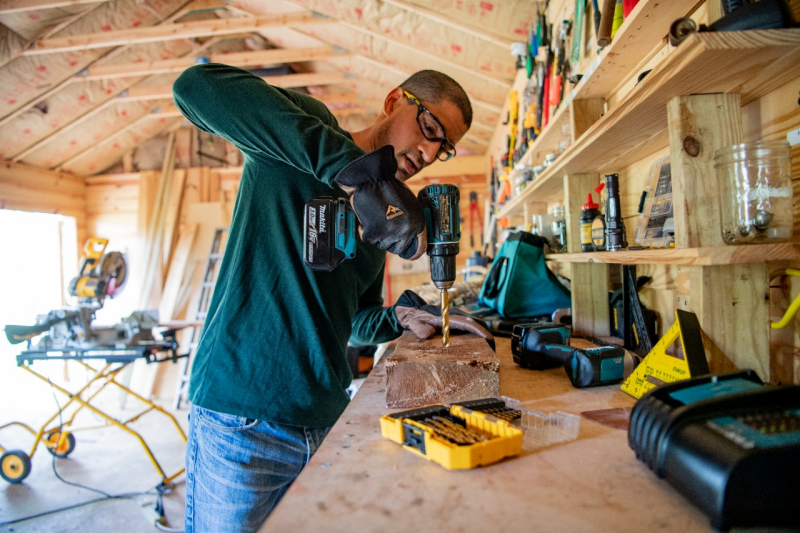
Regional notes appear in the same material: these scenarios are described as common in the United States, Australia and the Philippines, and power tool manufacturing as common in China, Laos, the Philippines and Thailand. Certification expectations listed for these applications are CE, UL, INMETRO and FCC, alongside IP rating, multi-language manuals and retail-ready packaging.
What to confirm before committing to a platform
Because the category is a system, the costliest beginner error is a tool that shares nothing with the rest of the kit. Five checks cover most of the risk.
- Bare tool or kit. Confirm whether the quoted configuration includes a battery pack and charger, since those are listed as separate matched items.
- Model-specific documents. Geakita states that its products are designed to meet IEC/UL 62841-1 and that its lithium-ion batteries are associated with IEC/UL 62133. A design claim is not a certificate, so request the certificate and test report that name the exact model.
- Battery transport paperwork. Geakita reports UN38.3 and dangerous-goods documentation as part of its shipment process. Confirm it per battery model before shipping.
- Inspection route. Geakita states that third-party inspection by SGS or TÜV and on-site factory acceptance can be arranged on request.
- Platform continuity. Check that one charger family covers the assortment you intend to run, rather than three.
Frequently asked questions
What makes a tool a cordless power tool?
It performs mechanical work on a workpiece while running from a battery pack rather than a mains cable — drilling, fastening, cutting, grinding, chiseling or screwdriving. The definition covers tools such as cordless drills, rotary hammers, impact wrenches, impact screwdrivers, angle grinders and circular saws. Battery-powered pool cleaners and commercial cleaning robots do not belong to this category: they are separate equipment types with their own specifications, even though Geakita manufactures both.
Which certifications matter for cordless power tools?
Geakita's application material names CE, UL, INMETRO and FCC as the certification expectations for these tools across its target markets. For the underlying standards, the company states that its products are designed to meet IEC/UL 62841-1 and that its lithium-ion batteries are associated with IEC/UL 62133. Because a stated design alignment is not a certificate, a buyer should ask for the certificate and test report that identify the exact model, and confirm current validity before relying on either.
Is brushless better than brushed?
Brushless and brushed describe how current is switched inside the motor, not how well a tool performs a task. A brushed motor uses carbon brushes running on a commutator; a brushless design switches electronically, so brushes and their wear surface are removed from the design. Geakita's range includes both: brushless pure copper motors on models such as the DK-05, PT24, PT-21, HM05, GKR05 and QZ05, and brushed models such as the 12V 9868 drill and the 21V 9996 impact drill. The published sheets do not quantify a runtime or service-life difference, so compare two models on the task and the governing specification instead.
Does a 21V tool always have more torque than a 16.8V tool?
No, not on Geakita's published figures. The 16.8V DK01 lists 120 N·m maximum torque, while the 21V PT20 and PT-21 each list 80 N·m, and the 21V PT24 lists 150 N·m. Voltage identifies the battery platform and the packs a tool accepts; torque at the output depends on the motor, gearbox and control electronics of that specific model. The safe habit is to compare torque only between tools intended for the same job, and to keep the chuck size in view as a separate constraint.
Does a cordless tool arrive with a battery and charger?
Not necessarily. Geakita supplies 16.8V and 21V battery families, chargers and matched kit configurations as listed items, so the same range can be bought as a bare tool or as a kit depending on the configuration quoted. Before ordering, confirm three things: whether the SKU includes a pack and charger, which battery platform the tool accepts, and whether your existing packs are compatible. Datasheets, battery options and sample arrangements for specific models can be requested directly from the manufacturer.
The takeaway
Cordless power tools are one category built from one repeating chain: battery platform, motor, control and transmission, tool head. Once that chain is clear, the six families stop looking like a catalogue and start looking like six different answers to six different motions. The numbers also settle into place: voltage belongs to the platform, torque and drilling capacity belong to the task, and chuck size belongs to the consumable.
For a first-time buyer at the research stage, three readings are worth carrying forward. Compare torque and capacity within a family, never across it. Treat 16.8V, 18V and 20V Max labels as naming conventions that require a platform check rather than a ranking. And treat any standards statement as a document request, because the certificate naming your exact model is the only thing that answers the compliance question.
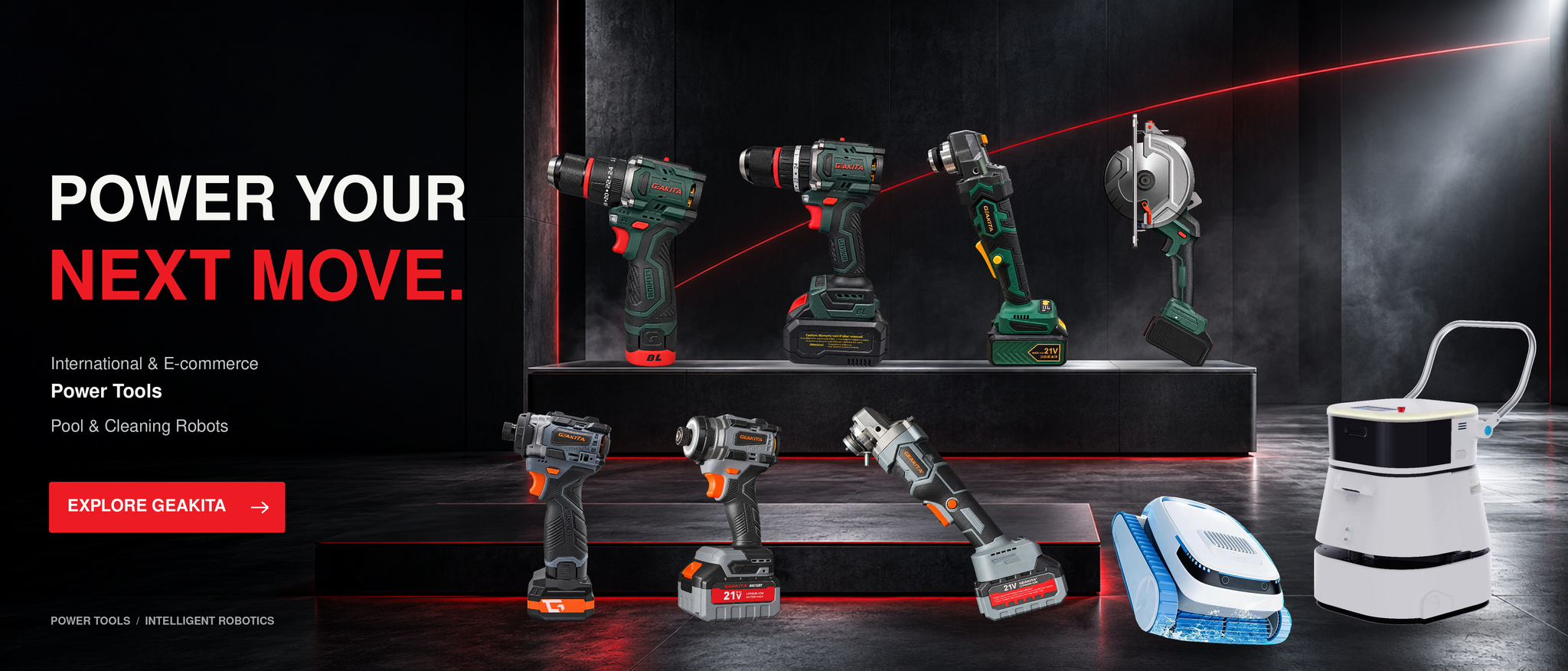
Next step: Geakita publishes its cordless tool range, 16.8V and 21V battery families and matched accessories at geakita.com. The 2026 corporate profile and product catalogue, covering drills, impact wrenches, angle grinders, rotary hammers and accessories, can be downloaded here: GEAKITA Corporate Profile & Product Catalog 2026. For model datasheets or sample requests, contact flora@geakita.com.