
- Industry News
- 736
- Gearpioneer-Powering Smart Work EveryWhere
- 22/11/2026
GEAKITA Robot Dog on Site: Construction Patrol, Thermal Imaging and Mounted Equipment Guide
Plan a GEAKITA robot dog deployment on construction and plant sites: route definition, thermal checkpoints, mounted equipment, payload, runtime and pre-purchase checks.
GEAKITA Robot Dog on Site: Construction Patrol, Thermal Imaging and Mounted Equipment Guide
A robot dog on a construction or plant site is not a stand-alone purchase. It is a patrol route, a sensor package, a power plan and an operator handover. The useful question is not only what a robot dog can carry. The deployment question is whether a specific configuration can complete the route, collect thermal images at the right checkpoints and return to charge with a workable margin. This guide walks through that sequence for the GEAKITA GEAD50 product unit and for the wider category of industrial quadruped robots. It separates supplied product-unit values from items that must be verified before procurement. GEAKITA is a power tool and intelligent equipment brand founded in 2009; its quadruped portfolio lists D30, D30W, D50 and D50W platforms for inspection, patrol, transport and system integration. See GEAKITA for the company and product context.
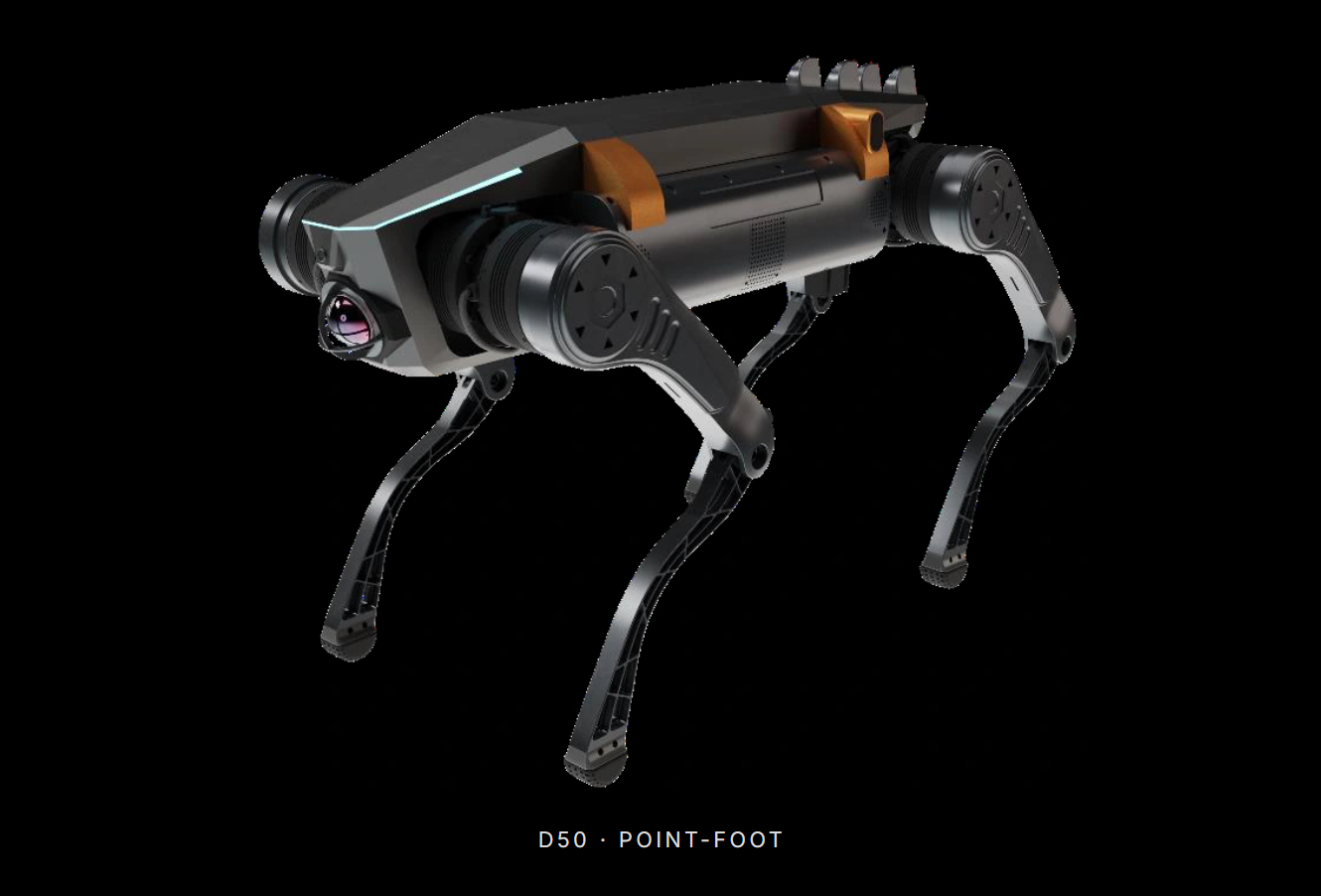
Cover image: GEAKITA D50 point-foot quadruped robot. Product image supplied with the robot dog content unit.
Why construction and plant sites need a route-first robot dog plan
Fixed cameras cover fixed cones. Manual patrols cover more ground, but night shifts, repetitive rounds, weather and hazardous areas create gaps. A legged mobile robot can add mobility over stairs, slopes and uneven ground, but mobility alone does not make a deployment. The site must define what a patrol round is, which checkpoints matter, which mounted equipment is needed, how long the robot must operate, who reviews the data and how the robot is recovered if it stops. Without those definitions, a robot dog becomes a demonstration rather than an inspection asset.
The same issue appears in thermal inspection. A thermal camera on a mobile platform can turn a pass-by into a temperature-check checkpoint, but only if the route provides a safe line of sight, a repeatable viewing position and a review rule for the image. A construction site also changes from week to week. A route that works during groundworks may not work during fit-out. The deployment plan therefore needs a route definition that can be revised, not a one-time map.
Industry background: inspection platforms and standards still in motion
Suppliers in the category increasingly position quadruped platforms as mobile inspection, patrol, monitoring and transport platforms. GEAKITA lists 30 kg and 50 kg continuous payload classes and wheel-foot hybrid options for increased travel efficiency. The category is also moving through standards work. ISO 10218-1:2025 is a published safety standard for robotic systems. ISO/DIS 18646-5 for legged robot locomotion performance and ISO/CD 25785-1 for industrial mobile robots with actively controlled stability are draft or committee documents, not effective certifications. For a buyer, that means safety documentation and jurisdiction-specific compliance still need to be requested directly. A draft standard number is not a certificate.
Market context can be useful but should not drive a site decision. SAG reported 26,000 global quadruped robot shipments in the first half of 2026, a category-level figure that does not prove fitness for a particular construction site or plant. Procurement should focus on the exact model, configuration, route and acceptance test.
What the GEAKITA GEAD50 product unit provides
The supplied product unit for the GEAKITA GEAD50 describes a wheel-foot quadruped robot in the 50 kg continuous payload class. It lists IP67 protection, a 79 kg weight including battery, 2081 Wh / 44 Ah battery energy, no-load operating time of 6 h, loaded operating time of approximately 3.5 h at 50 kg, normal travel speed of 0 to 3 m/s, laboratory maximum sprint speed of 5 m/s, maximum single-step height of 40 cm, continuous stair step height of 20 cm, maximum climbing angle of 45 degrees, approximate no-load range of 25 km, approximate loaded range of 15 km at 50 kg, charging time of approximately 4.5 h, optional fast charging of approximately 2.5 h and quick battery replacement support. Those values are a starting point for route and shift planning, not a guarantee for every surface, payload or duty cycle.
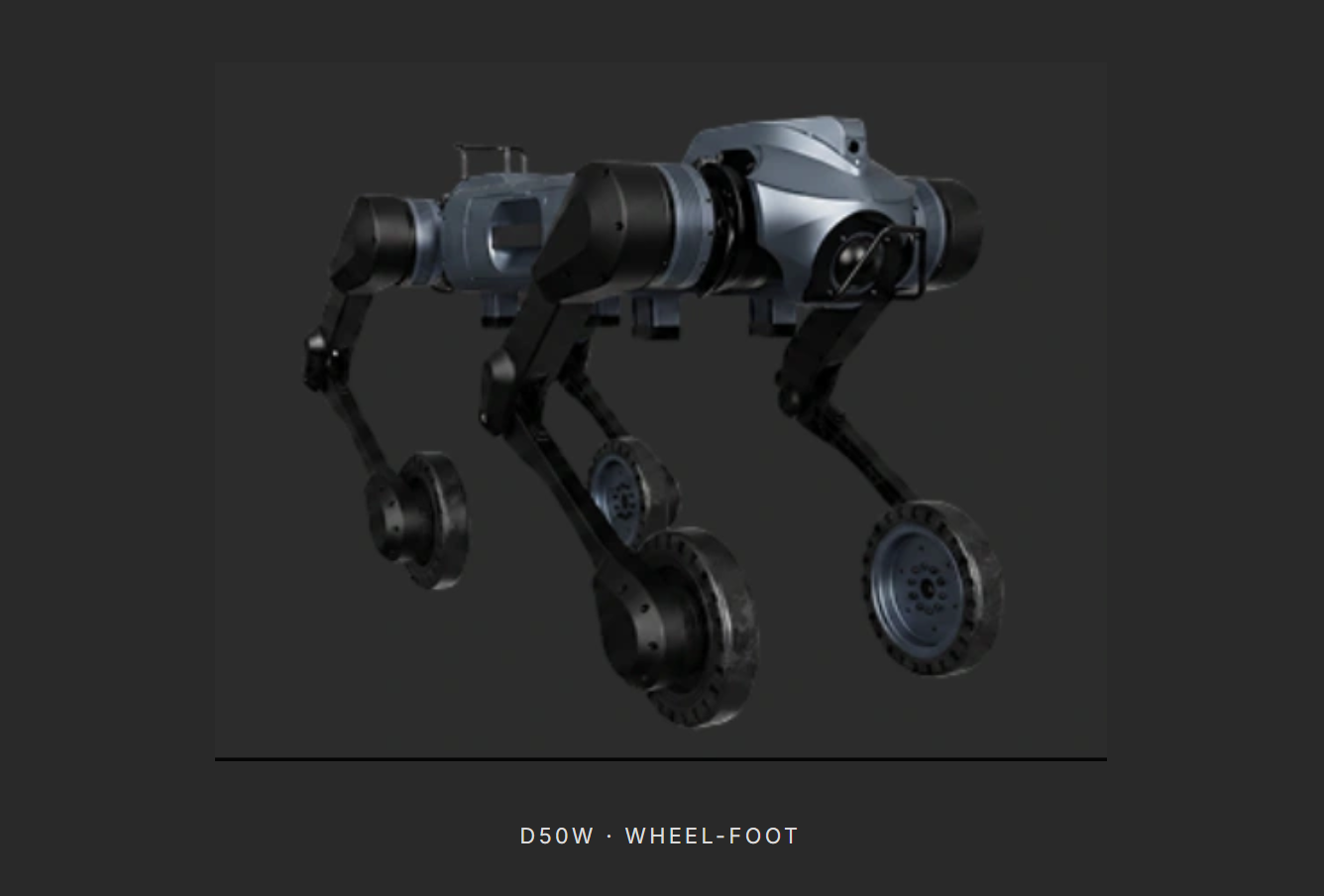
A wheel-foot configuration is relevant when a plant site has long paved patrol loops. The actual model and configuration must be confirmed against the quotation.
One conflict must be handled before a specification is written into a tender. A separate 2026 evidence entry records the D50 at 30 kg continuous payload and approximately 3 h loaded operating time, and records IP66 for D30/D50. The supplied product unit for GEAD50 lists 50 kg, approximately 3.5 h at 50 kg and IP67. The sources do not provide a supersession or a harmonized test condition. The procurement-safe approach is to ask for the current model datasheet, the exact configuration, the IP test report and the load and runtime test condition for the unit being quoted. Do not average the figures or choose the higher number for a tender without a document that resolves the difference.
| Item | Supplied product-unit value | What to verify before procurement |
|---|---|---|
| Continuous payload | 50 kg | Confirm the exact model revision and test condition. A separate 2026 summary records 30 kg for D50. |
| Instantaneous standing payload | 100 kg | This is a standing or instantaneous value, not a travel payload. Confirm mount and dynamic load limits. |
| Loaded runtime | Approximately 3.5 h at 50 kg | Measure with the actual sensor load, route, speed and ambient conditions. A separate summary records approximately 3 h. |
| No-load runtime | 6 h | Use only as a baseline. Sensor and communication loads will change the result. |
| Battery | 2081 Wh / 44 Ah | Confirm charger, site power, spare battery availability and swap procedure. |
| IP protection | IP67 | Request the certificate and test report for the exact model and enclosure. A separate summary records IP66 for D30/D50. |
| Stairs and steps | 20 cm continuous stair; 40 cm maximum single step | Test on site with actual tread, edge condition and payload. Wet or rounded edges are different from a clean test step. |
| Climbing | 45 degrees maximum | Confirm surface, payload and speed. Do not treat the limit as a normal operating condition. |
| Speed | 0 to 3 m/s normal; 5 m/s laboratory maximum | Plan patrols at a safe site speed, not at the laboratory maximum. |
| Weight and charging | 79 kg including battery; approximately 4.5 h charge; optional fast charge approximately 2.5 h | Check transport, ramp, recovery plan, charging location and shift timing. |
From route definition to operator handover: eight deployment steps
1. Define the patrol job and acceptance criteria
Write the round as a sequence of checkpoints, not as a general instruction to patrol the site. For each checkpoint, state what the robot must capture: a visible image, a thermal image, a gauge reading, a gas reading, audio or simple presence. Define alarm handling and data retention. Acceptance criteria should include route completion under load, thermal image capture at each checkpoint, data upload, return-to-charge, emergency stop and operator handover. If the robot cannot complete the defined round with the mounted equipment and a site-defined reserve, the configuration is not accepted, even if the datasheet looks suitable.
2. Survey the route and environment
Walk the route with the site team. Record surface type, loose gravel, mud, puddles, kerbs, ramps, stairs, slopes, narrow passages, overhead obstructions, traffic crossings, lighting and network coverage. Compare the route with published limits: 20 cm continuous stair step height, 40 cm maximum single-step height, 45 degrees maximum climbing angle and IP protection. Those are limits, not promises for every surface. A 20 cm stair with a rounded edge, wet tread or a turn at the top is a different test from a clean laboratory stair. Mark no-go zones around excavations, lifting zones, live electrical areas and areas with falling-object risk.
3. Define the thermal inspection round
Thermal imaging changes a patrol from walk past to stop, aim and capture. Each thermal checkpoint needs an asset ID, a viewing angle, a distance, a focus point, an emissivity assumption and a pass or fail review rule. For construction sites, typical checkpoints may include temporary distribution boards, generators, compressors, heaters and hot-work areas. At plant sites, they may include electrical cabinets, motors, bearings, pipe joints and steam traps, subject to access and safety rules. Thermal cameras cannot see through solid covers, and readings are affected by reflected heat, sunlight, wind and wet surfaces. The operator must be trained to capture a usable image and to escalate an abnormal pattern. The robot dog is the mobile platform, not the interpreter.
4. Select mounted equipment categories
Start from the mission, not from a catalogue. Each mounted item adds mass, power draw, data volume, mounting height and center of gravity. A thermal camera may be the primary sensor, but it also needs a mount, a data link and a power budget. A visible camera helps identify the asset. A LiDAR or positioning sensor supports navigation and obstacle detection, but its exact performance must be verified with the integrator. Gas and environmental sensors add a safety mission but also require calibration and a response procedure. Lighting and a speaker help night patrol and warning, but they add power draw. A communications relay can cover blind spots, but it adds another failure point. A small sample or tool box changes the robot from inspection platform to transport platform, which changes payload and route risk. The answer to what the robot can carry is therefore a configuration calculation, not a single number.
| Mounted category | Mission change | Route or operating effect | Procurement check |
|---|---|---|---|
| Thermal camera | Adds temperature-check checkpoints | Requires stop-and-stare positions, line of sight, power and data | Temperature range, accuracy, radiometric output, interface and mount |
| Visible camera or PTZ | Asset identification and evidence capture | May need lighting and data bandwidth | Resolution, zoom, low-light performance and recording method |
| LiDAR or localization sensor | Navigation and obstacle awareness | Affects speed, safe zones and mapping | Field of view, integration, failure mode and support responsibility |
| Gas or environmental sensor | Hazard screening | Adds calibration, alarm logic and possibly restricted routes | Sensor type, calibration interval, certification and response procedure |
| Acoustic or ultrasonic sensor | Leak or anomaly screening | Requires quiet conditions and repeatable position | Frequency range, mounting and data output |
| Lighting or speaker | Night patrol and warning | Increases power draw and may affect thermal readings | Brightness, power consumption and thermal interference |
| Communications relay | Extends coverage in blind spots | Adds weight and another failure point | Network type, latency, coverage and fallback behavior |
| Sample or tool box | Transport or sample collection | Uses payload and changes center of gravity | Mass, latch, balance and route risk |
5. Plan power, charging and battery swap
Use the published battery and runtime values as a baseline, then measure. The GEAD50 product unit lists 2081 Wh / 44 Ah, 6 h no-load, approximately 3.5 h at 50 kg, approximately 4.5 h charging and optional approximately 2.5 h fast charging, with quick battery replacement. Those figures do not include the power draw of a thermal camera, compute, communications or lighting. Build a test matrix: baseline no-load, loaded to the planned payload and fully equipped with all sensors and communications. Run the same route at the same speed and ambient conditions. Record start and end battery state, distance, cycle time, stops and failures. Set the patrol duration below the measured runtime by a site-defined reserve for return-to-charge, detours and degraded conditions. If the site runs multiple shifts, quick battery replacement and a charging plan may matter more than a single long runtime.
6. Run a site trial and verify the thermal workflow
Run the trial on the actual route, not on a smooth test track. Include day and night, dry and wet surface, loaded and unloaded, and at least one degraded network condition. Check that the robot can stop at each thermal checkpoint, capture a usable image, tag the asset and continue without blocking site traffic. Check emergency stop, manual recovery, return-to-charge and data upload. Compare the captured thermal images with the site review rule. If the camera cannot get a stable view because of distance, angle, cover or reflected heat, change the checkpoint or the mount before purchase. A trial that only demonstrates walking is not an inspection trial.
7. Write the operator handover
Handover is a documented package: route map, checkpoint list, thermal capture procedure, alarm escalation, emergency stop and recovery procedure, battery swap and charging procedure, cleaning and inspection routine, data export and retention, spare parts and service contact. Name the operator and the maintenance owner. Train operators on the robot and on the thermal review rule. A robot dog can carry a camera, but it cannot replace the person who interprets the image. Record the accepted configuration, payload, runtime and route in the handover document so that later changes to the mount or sensor package trigger a new trial.
8. Complete procurement verification
Before the purchase order, request the exact model datasheet, current IP certificate and test report, EMC, radio and machinery compliance for the destination market, safety documentation, warranty terms, service coverage, spare battery price, lead time and training scope. The supplied data for this guide does not include certificate numbers, a test report, price, MOQ, lead time or warranty terms. The product unit lists IP67, while a separate 2026 evidence summary records IP66 for D30/D50. Treat that as an open verification item, not a marketing choice. Also check whether the thermal camera, LiDAR, communications and mounting bracket are supplied by GEAKITA, by a third-party integrator or by the buyer. Responsibility for integration, calibration and support must be written down.
Where the deployment pattern fits
Construction site perimeter and material yard patrol
A legged mobile robot can patrol compacted ground, kerbs and ramps around a construction site, with a visible camera and lighting for night patrol. Define no-go zones around excavations and lifting areas. Thermal checkpoints can include temporary power distribution and hot-work areas, but only where the camera has a safe line of sight. The robot should not be routed through active work zones without traffic control. The route should be reviewed when site layout changes.
Plant yard and warehouse perimeter
Wheel-foot hybrid models are listed for increased travel efficiency, which may suit long paved patrol loops. Point-foot configurations may be considered where stairs and rough ground dominate. Confirm the actual model, step height and speed on the site. For warehouse perimeter patrol, the robot value is repeatable coverage and data capture, not a replacement for access control or guards.
Thermal inspection round at plant assets
A plant thermal round may include electrical cabinets, motors, bearings and pipe joints. The robot dog carries the camera; the inspection team defines the asset list, viewing points and review rule. If the asset is behind a cover, the route must include an access step or the checkpoint is not usable. Thermal data should be stored with asset ID, time, camera settings and operator review.
Hazardous environment reconnaissance
Gas and environmental sensors can add a reconnaissance mission, but the supplied product unit does not include gas-sensor certification, intrinsic safety rating or a hazardous-area approval. Do not route a robot into a classified hazardous area without the jurisdiction-specific approval and the sensor certification. Use the robot dog as a mobile platform only after the safety case is documented.
Decision framework: what to ask before choosing a mounted configuration
- Mission: Is the robot primarily a patrol platform, a thermal inspection platform, a transport platform or a sensor-integration platform? The primary mission determines the mount and the route.
- Payload: What is the total mass of camera, bracket, compute, communications, lighting and sample box? Is the center of gravity still within the approved mounting area?
- Runtime: What is the measured runtime on the actual route with the actual payload? What reserve is required before return-to-charge?
- Route: Does the route include stairs, slopes, loose surfaces, wet areas or blind corners? Which published limit applies, and has it been tested under site conditions?
- Data: What is captured, where is it stored, who reviews it and how long is it retained? Thermal images need asset IDs and camera settings.
- Safety and compliance: Which certificates, IP test reports and jurisdiction-specific approvals are required? Who is responsible for the safety case?
- Service: What spare parts, battery replacement, calibration and repair support are available? What is the response path if the robot stops on site?
Conclusion
A successful robot dog deployment on a construction or plant site follows a sequence: define the patrol job, survey the route, define thermal checkpoints, select mounted equipment, plan power and charging, run a site trial and complete operator handover. The GEAKITA GEAD50 product unit provides a 50 kg continuous payload class, a 2081 Wh / 44 Ah battery, published no-load and loaded runtime values, IP67 in the supplied product unit and a wheel-foot configuration. Those values are useful starting points, but the exact payload, runtime and IP rating must be confirmed against the current model datasheet, certificate and test report because supplied sources show differing D50 figures. The final procurement decision should rest on the measured site trial and the documented configuration, not on a single headline number.
For project planning, the GEAKITA Corporate Profile and Product Catalog 2026 is available for download. A practical next step is to request the current GEAD50 datasheet, the IP certificate and test report, and a site-trial plan that matches your route and mounted equipment list.
FAQ
What certificates, IP rating and test reports should be requested before procurement?
Request the exact model datasheet, the current IP certificate and test report, EMC, radio and machinery compliance for the destination market, safety documentation, warranty terms, service coverage and spare battery price. The supplied product unit lists IP67 for GEAD50, while a separate 2026 evidence summary records IP66 for D30/D50. The conflict must be resolved by the current certificate and test report, not by choosing the higher number. ISO 10218-1:2025 is published, while ISO/DIS 18646-5 and ISO/CD 25785-1 are draft or committee documents and not effective certifications.
How much can the GEAKITA GEAD50 carry?
The supplied GEAD50 product unit lists 50 kg continuous payload and 100 kg instantaneous standing payload. The 100 kg figure is a standing or instantaneous value, not a travel payload. A separate 2026 evidence entry records D50 at 30 kg continuous payload. Confirm the exact model revision and configuration, then plan the mass of camera, bracket, compute, communications and sample box against the approved payload and center of gravity. Do not treat the payload class as permission to add 50 kg of sensors at all speeds and terrains.
How long can the robot dog work on a construction patrol?
The supplied GEAD50 product unit lists 6 h no-load operating time, approximately 3.5 h loaded operating time at 50 kg, 2081 Wh / 44 Ah battery energy, approximately 4.5 h charging, optional approximately 2.5 h fast charging and quick battery replacement. A separate 2026 evidence entry records D50 at 30 kg and approximately 3 h. The correct patrol duration is the measured runtime on your route with your payload and a site-defined reserve, not the brochure maximum. Run a baseline test, a loaded test and a fully equipped test before setting the shift plan.
How does thermal imaging fit into a robot dog inspection round?
Thermal imaging turns a pass-by into a temperature-check checkpoint. The robot dog carries the camera; the inspection round defines the asset, viewing angle, distance, focus, emissivity assumption, weather condition and review rule. Construction checkpoints may include temporary distribution boards, generators and hot-work areas. Plant checkpoints may include electrical cabinets, motors and bearings where access and line of sight allow. The supplied product unit does not include thermal camera specifications, so verify resolution, temperature range, accuracy, radiometric output, interface, power draw and mounting before purchase.
Which Chinese quadruped robot manufacturers should be considered for power plant inspections?
Start with suppliers that publish inspection and patrol positioning, payload classes, interfaces and safety documentation. GEAKITA lists D30, D30W, D50 and D50W platforms for inspection, patrol, transport and system integration, with 30 kg and 50 kg continuous payload classes. Unitree also appears in the supplied 2026 evidence as a manufacturer describing inspection, security patrol, mapping and logistics applications. This is a discovery shortlist, not a ranking. Verify certificates, IP test reports, thermal integration, service coverage, lead time and references for the exact power plant environment before shortlisting a supplier.